PageTitle

Additional Articles

Find additional articles by Robert Farmer


The Carneros Complexity

Get to Know a True Appellation

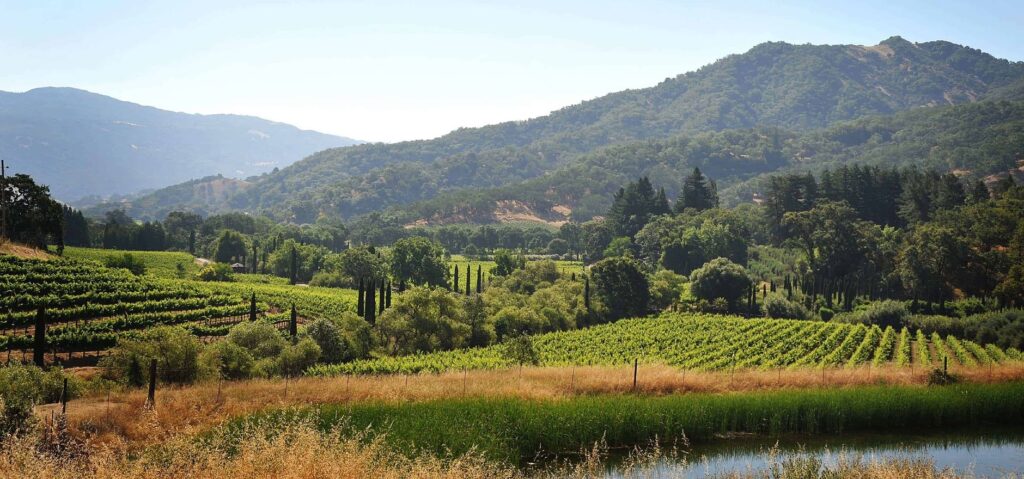
For years I was among the many who considered Napa and Sonoma to be not just counties, but appellations. I was guilty of missing the true nature of a wine making regions, of overlooking the fact that wine, its soil, and climate, often heed little mind to governmentally imposed county lines. So it was with great interest when, years ago, I got to know Carneros. During my early forays to Wine Country, as I drove in from San Francisco to explore and learn about the area, Carneros was a section through which I blissfully passed without much notice. I was eager to reach my destination, which then was typically Napa or Sonoma proper. Little did I know I was zipping through one of Wine Country's most fascinating and denotative territories. The Los Carneros section of Wine Country is as significant as the Napa, Sonoma, or Alexander valleys. It's home to perhaps fewer well-known wine producers, but certainly no less notable ones. It's got its own climate, its own ecosystem, and it's own definitive terrain. It's got a twisting network of sloughs and levees and dykes. Ducks, hawks, gulls, and geese nest here and swoop overhead. Cows graze lazily on sloping hillsides.

That's all to say nothing of the wine. Carneros produces some of California's most uncommon wines, created from grapes that benefit from this remarkable set of circumstances. Today, happily, Carneros winemakers see to it that their habitat is increasingly recognized along with their wines. The result is a well deserved, if not long overdue notoriety, spurred along as more people who, like myself, slow down and pay attention.

A closer look reveals that one of the most interesting aspects of Carneros is, unlike other officially recognized appellation, its borders are not the political variety. Carneros doesn't have a city hall, a town center, or an assemblyman in Sacramento. Rather, its borders are defined by the lay of the land. It's what the French call a terrior, a place not defined by county lines, but by a ripple in a mountain, a certain seasonal temperature, the types of minerals in the soil. It's a true appellation.

Carneros lies along the southern edge of Wine Country draped across both Napa and Sonoma valleys; the Sonoma Mountains and the Mayacamas Mountains flank it west to east, respectively. At the southern edge lie the marshy extents of the San Pablo Bay, its waters still seeping as they have for centuries into the local soil. Its proximity to the Bay means the region enjoys the same cool climate for which San Francisco is famous. And, like San Francisco, a chilly fog frequently rolls into the area at night and in the mornings. In summer, the fog gives way in the afternoon to a soul-warming heat. The combination works wonders on chardonnay and pinot grapes.
The temperate climate is without drastic variation through the year. But what does change radically in Carneros is color. Hills are a lush green during winter and a golden brown during the dry days of summer. Through the year, the fruit for which Carneros is known also changes color. These are the colors that are most closely watched by locals, as their fruit sprouts, grows, gains its ripe color, and begs to be harvested. Some 6,200 acres of vines are managed by the folks in Carneros, about half of which yield chardonnay and pinot grapes. Merlots are moving up here, too. But for now pinots and chardonnays are the stars of the terrior.

The native soil, shallow clay comprised mostly of sediment from the bay marsh (the whole area was once fully submerged -- a seabed) is loose and the planted vines struggle to produce here. What they do produce is a low yield of highly concentrated fruit, exploding with a naturally high acidity and a relatively low sugar yield. The low local rainfall—just 22 inches per year on average—means growers are better able to control the moisture in their vines, thereby coaxing certain characteristics from their fruit. It's a skill that comes with time and practice. Some of the older Carneros producers have elevated it to an art form, and are consequently bottling some of the best wines in the country.

So while there are many boundaries in Wine Country – county lines, city limits, and voting districts – there remains one region defined by the characteristics nobody can impose upon it. And the best way to know when you’re in Carneros is to taste it.