It might seem unusual in a coastal town known for surfing and with a march-to-its-own-drummer
attitude to plan a wine-tasting itinerary. But in Santa Cruz, which
claims the title of Surf City USA and is home to the UC Santa Cruz “Banana
Slugs,” wine is one of the best reasons for visiting.
Surfing is still a
way of life in Santa Cruz, but so too is winemaking. Just as
surfers have for years migrated toward the cold waters of the Santa
Cruz coast for the idyllic swells, winemakers have paddled into the region
to take advantage of near-perfect, if somewhat temperamental, conditions
for growing grapes. And, not surprisingly, much of the wine they’ve made
during the intervening years has possessed the eclectic qualities of Santa
Cruz itself—quirky, interesting, and individualistic.
Like most of the wine-producing
regions of California, the Santa Cruz history of grape growing
dates to the 1860s, when wine was made here in abundance and consumed
with abandon until Prohibition stamped out the industry countrywide. The
modern wine industry in Santa Cruz started up again in the 1940s, slowly
taking root but also growing up in the shadow of Napa. Still, the niche
was being carved over time, and was helped along significantly when in 1981
the Santa Cruz Mountains were designated an American Viticultural Area (AVA).
Today the Santa Cruz Mountains Winegrowers Association has about 50 member
wineries under its umbrella.
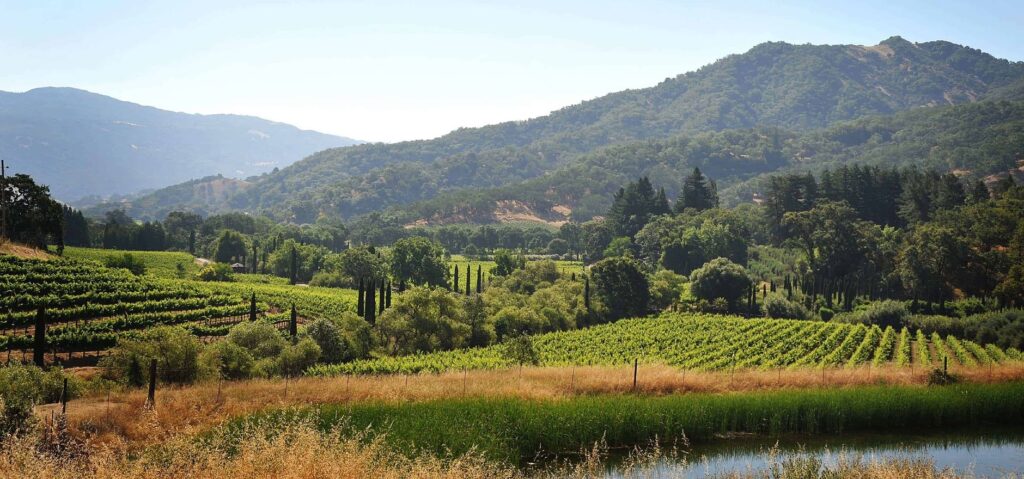
The wines of Santa Cruz reflect their terrain—
discernible by wooded hillsides and tough-to-tame topography.
And while chardonnay makes up about a third of the planted acreage,
some of the most memorable wines from the region are cabernets and pinot
noirs. Each of them is unique in character and complexity, like the winding
scenic roads that wend through forests and lead you to the wineries themselves.
One of the best examples of the Santa Cruz aesthetic is found at Bonny
Doon Vineyards (10 Pine Flat Road, Santa Cruz;
831-425-4518; www.bonnydoonvineyard.com),
whose tasting room is reached via long drive up a verdant hill.
Though the wines of Bonny Doon are typically great and indeed enjoy a cult-like
following, they do not take themselves too seriously. With names
like Clos De Gilroy, Sangiovese Il Fiasco, and The Heart Has Its
Rieslings, you know you won’t be asked to expound on the “pairing tendencies”
of the glass when visiting the tasting room. Instead, Bonny Doon encourages
personal experience and promotes a free-spirited atmosphere that can seem
antithetical to the wine tasting experience. But it’s loads of fun and just
the sort of ambiance that you can expect from Santa Cruz.
Also embodying
the Santa Cruz spirit is the Burrell School Vineyards
and Winery (24060 Summit Road, Los Gatos;
408-353-6290; www.burrellschool.com) located near the summit of the mountain that separate the coast from southern
tip of Silicon Valley. Housed in a restored historic red schoolhouse, the
tasting room is friendly and unpretentious. The wines are well executed
and offered with a touch of whimsy (try the “Dean’s List” cab).
With great views of the Santa Cruz Mountains, the tasting room and surrounding
grounds is a great spot to spend an afternoon.
Another great Santa Cruz
Mountain tasting room is Ridge Winery (17100
Monte Bello Rd, Cupertino; 408-867-3233; www.ridgewine.com), tucked away but not
far off the beaten path. Situated at the top of Monte Bello Ridge, the winery
offers stellar views of the Bay Area, and its tasting room staff is welcoming
and knowledgeable. Ridge reliably produces a number of great varietals,
but I am a big fan of their zinfandels, which are typically lush
and beautifully structured. Ridge produces wine from its estate
vineyards on Monte Bello Ridge, as well as with grapes from vineyards
in Northern and Central California.
Of course, there are enough
great wineries that call Santa Cruz home to keep the intrepid
taster busy for a couple weeks. From Thomas Fogarty to Picchetti, to David
Bruce, the names in this area are some of the best known in wine. It’s time
you waxed your board and headed to Santa Cruz to catch the wave.
Click Here to view previous
articles by Robert Farmer